5 Signs Your Small Business Needs to Outsource Bookkeeping (Before It’s Too Late)
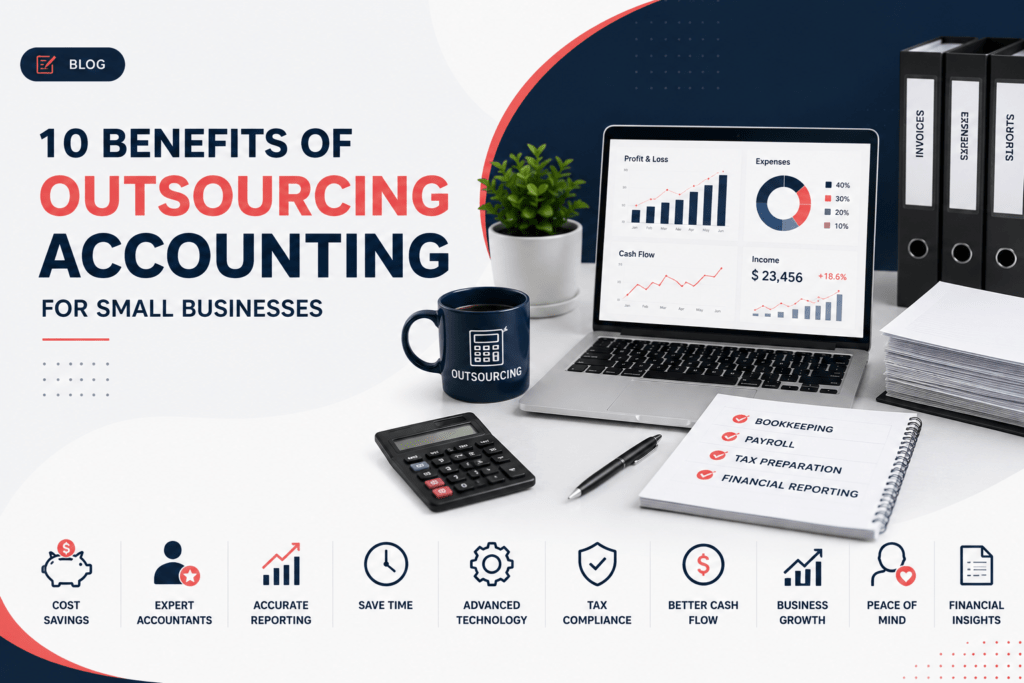
5 Signs Your Small Business Needs to Outsource Bookkeeping (Before It’s Too Late) Introduction Running a small business comes with endless responsibilities. From managing employees and serving customers to driving sales and planning for growth, business owners often wear multiple hats. Amid all these priorities, accounting is one area that frequently gets pushed aside. Unfortunately, even small bookkeeping mistakes can lead to cash flow issues, tax penalties, or poor financial decisions. This is why more businesses are turning to outsourced accounting services. Instead of hiring and managing an in-house accounting team, companies partner with experienced accounting professionals who handle everything from bookkeeping and payroll to financial reporting and tax preparation. Outsourcing accounting is no longer just a cost-saving strategy it has become a smart business decision. It allows business owners to focus on growth while experts ensure that financial records remain accurate, compliant, and up to date. In this article, we’ll explore the top 10 benefits of outsourcing accounting for small businesses and explain why this approach is helping companies become more efficient, profitable, and future-ready. Why More Small Businesses Are Outsourcing Accounting Small businesses often have limited budgets and resources. Hiring experienced accountants, purchasing accounting software, and keeping up with changing tax regulations can become expensive and time-consuming. By outsourcing accounting, businesses gain access to qualified professionals, advanced technology, and reliable financial insights without the overhead costs of maintaining an internal accounting department. 1. Significant Cost Savings One of the biggest advantages of outsourcing accounting is reducing operational costs. Hiring an in-house accountant involves salaries, employee benefits, office space, training, software subscriptions, and recruitment expenses. Outsourcing eliminates many of these costs while giving businesses access to experienced professionals. Instead of paying a full-time salary, businesses only pay for the accounting services they actually need. Benefits Lower payroll expenses No recruitment costs No employee benefits Reduced software investment Predictable monthly pricing 2. Access to Experienced Accounting Professionals Accounting regulations continue to evolve every year. Professional accounting firms stay updated with the latest tax laws, compliance requirements, and financial reporting standards. This means businesses receive accurate advice from experienced professionals rather than relying on a single employee with limited expertise. Expert accountants can also identify opportunities to improve financial efficiency and reduce unnecessary expenses. 3. More Time to Focus on Business Growth Many business owners spend hours every week organizing receipts, reconciling bank accounts, processing invoices, and preparing reports. These repetitive tasks reduce the time available for activities that actually generate revenue. Outsourcing accounting frees up valuable time so business owners can focus on: Customer relationships Sales Marketing Product development Business expansion 4. Improved Financial Accuracy Accounting mistakes can be expensive. Errors in bookkeeping may lead to inaccurate financial reports, missed tax deadlines, duplicate payments, or cash flow problems. Professional accounting teams use standardized processes and quality checks to minimize errors and maintain reliable financial records. Accurate books also make budgeting and business planning much easier. 5. Better Cash Flow Management Cash flow is one of the biggest challenges for small businesses. Professional accountants help businesses: Monitor incoming payments Track expenses Identify unnecessary costs Forecast future cash flow Improve working capital This allows businesses to avoid cash shortages and make smarter financial decisions. 6. Easier Tax Compliance Tax regulations can be complex and change frequently. Outsourced accountants help ensure: Accurate tax calculations Timely filings Proper documentation Compliance with regulations Maximum eligible deductions This reduces the risk of penalties and gives business owners greater peace of mind. 7. Access to Advanced Accounting Technology Professional accounting firms invest in modern cloud-based accounting software and automation tools. Businesses benefit from features such as: Real-time financial reporting Secure cloud storage Automated bookkeeping Digital invoice management Easy document sharing Without paying for expensive software licenses themselves. 8. Better Financial Reporting Accurate reports help business owners understand: Profitability Revenue trends Expenses Cash flow Business performance These insights support better planning and faster decision-making. Instead of guessing, businesses make decisions based on reliable financial data. 9. Scalability as Your Business Grows As a business expands, its accounting needs become more complex. Outsourced accounting services can easily scale by supporting: More transactions Additional employees Multiple business locations Payroll expansion Financial forecasting Without the hassle of hiring additional staff. 10. Reduced Stress and Greater Peace of Mind Knowing that qualified professionals are handling your finances allows business owners to concentrate on running the business. Instead of worrying about bookkeeping errors or tax deadlines, they gain confidence that their financial operations are in capable hands. This peace of mind is one of the most valuable long-term benefits of outsourcing accounting. Common Mistakes Businesses Make Before Outsourcing Waiting until tax season Choosing providers based only on price Failing to define service expectations Not reviewing monthly financial reports Delaying bookkeeping for months Frequently Asked Questions Is outsourcing accounting suitable for startups? Yes. Startups often benefit from outsourced accounting because it provides professional financial support without the cost of hiring a full-time accounting team. Is outsourced accounting secure? Reputable accounting firms use secure cloud platforms, encrypted data storage, and strict confidentiality practices to protect financial information. Can outsourced accountants handle payroll? Yes. Many providers offer payroll processing, employee tax filings, compliance management, and payroll reporting as part of their services. Does outsourcing replace accounting software? No. Most accounting firms work with modern cloud accounting software, allowing businesses to access real-time financial information while professionals manage the records. Conclusion Outsourcing accounting has become a practical solution for small businesses that want to reduce costs, improve financial accuracy, and focus on growth. From expert bookkeeping and tax compliance to better cash flow management and detailed financial reporting, outsourced accounting services offer businesses the flexibility and expertise needed to thrive in today’s competitive market. If your business is spending too much time managing finances or struggling to keep up with accounting tasks, outsourcing may be the next step toward improved efficiency and long-term success.
5 Signs Your Small Business Needs to Outsource Bookkeeping (Before It’s Too Late)
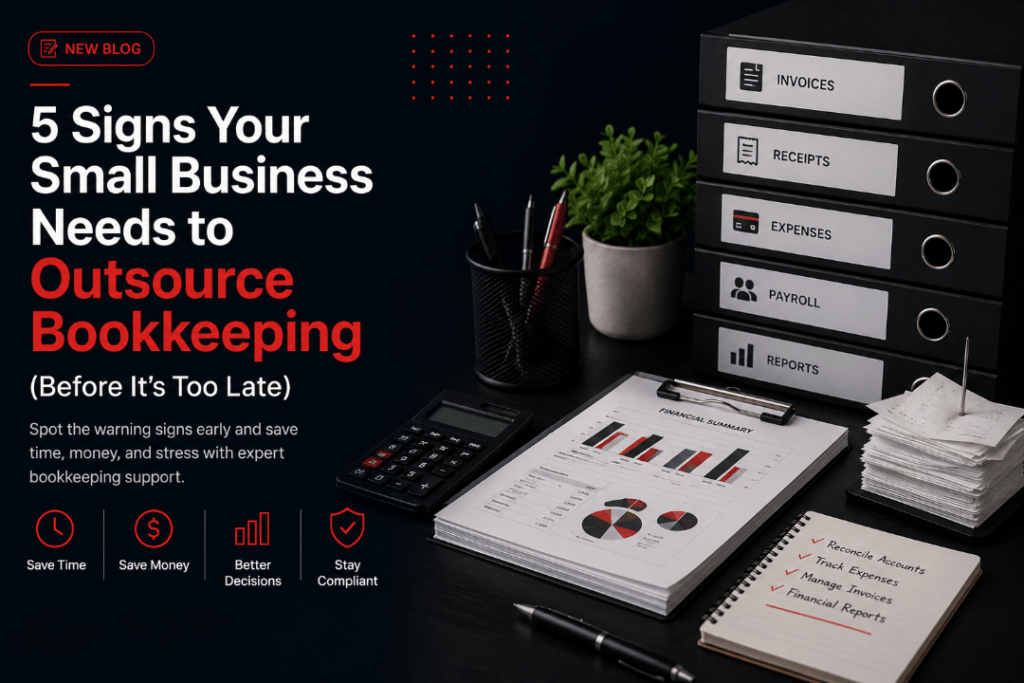
5 Signs Your Small Business Needs to Outsource Bookkeeping (Before It’s Too Late) Ask any small business owner what they hate doing most, and bookkeeping usually comes up in the top three. Not because it’s hard, exactly most of it is repetitive, not complicated but because it eats into evenings and weekends that were supposed to be for something else. A lot of owners start out doing their own books with good intentions. Maybe it’s a spreadsheet, maybe it’s a free trial of some accounting app. It works fine for a while. Then the business picks up, invoices start piling in from three different clients in the same week, and suddenly nobody’s opened the books in a month. Sound familiar? That gap between “I’ll get to it” and actually getting to it is where most bookkeeping problems start. Below are five signs that gap has gotten too wide, plus what actually changes once you hand the work over to someone else. Why This Keeps Happening It’s not that owners don’t care about their numbers. It’s that nothing about bookkeeping feels urgent until it suddenly is. A client emailing about a late invoice feels urgent. A supplier call feels urgent. Reconciling last month’s bank statement does not until tax season, or a loan application, or an investor call makes it very urgent all at once. By then you’re not just doing bookkeeping, you’re doing months of it in a panic. That’s usually the point where people start looking into outsourcing, though honestly, it’s worth doing sooner. 1. You Have to “Check” Before You Can Answer a Basic Money Question If a friend asked how the business is doing right now and you’d need to open three tabs and squint at a spreadsheet before answering, that’s worth paying attention to. Not because it’s embarrassing, but because it means you’re running the business partly blind. Business owners who’ve handed bookkeeping off usually get a report every week or two that actually tells them something what came in, what went out, what’s left. It sounds small, but knowing your numbers without digging for them changes how confidently you make decisions, especially the bigger ones. 2. Tax Season Turns Into a Scramble If you’re one of those people who’s still finding receipts in your car in March, this one’s for you. Messy books at tax time usually mean two things: a stressful few weeks, and deductions you probably missed because nobody had time to track them properly all year. A bookkeeper who’s on top of things keeps your records clean as you go, so by the time your accountant needs anything, it’s already sitting there ready. No digging through old emails for a receipt from last September. It’s a small thing until you’ve lived through the alternative a few times. 3. You’ve Lost Track of What Software You’re Even Supposed to Be Using QuickBooks, Xero, Wave, Zoho there’s no shortage of options, and honestly, most of them do the job fine. The problem isn’t usually the software. It’s that half of it never got set up properly, or categories got created and forgotten, or there are three ways the same expense type shows up depending on who entered it. This kind of mess doesn’t fix itself. Someone who does bookkeeping for a living will set the system up correctly the first time and keep it that way, which saves you from a much bigger, much more annoying cleanup job later. 4. Growth Is Outpacing Your Ability to Keep Up Ten transactions a month is manageable in a notebook if you really wanted. Two hundred a month is a different animal. As a business grows more clients, more employees, maybe a new product line the bookkeeping load grows with it, and a lot of owners don’t notice until they’re buried. This is usually where outsourcing stops being a “maybe someday” thing and becomes obviously worth it. It’s also worth mentioning: if you’re ever talking to a lender or an investor, the first thing they’ll want to see is clean financials. Scrambling to produce those on short notice doesn’t leave a great impression. 5. You’re Doing Bookkeeping Instead of Doing the Thing That Actually Grows Your Business This one’s the real cost, and it’s easy to underestimate. Every hour spent reconciling transactions or fixing a mislabeled expense is an hour not spent talking to a client, chasing a new lead, or actually building the business. Add it up over a month and it’s often more hours than people expect sometimes a full workday or two, sometimes more. That time has a cost even if it doesn’t show up on an invoice. Getting it off your plate isn’t just about convenience, it’s about where your attention goes. “But Isn’t Outsourcing Expensive?” This comes up a lot, and it’s a fair question. But it’s worth flipping around: what does it actually cost to do it yourself, badly? Missed deductions. Late fees. Decisions made on wrong or outdated numbers. Hours of your own time that could’ve gone toward something that actually makes money. DIY bookkeeping feels free the way ignoring a small leak feels free right up until it isn’t. A decent outsourced bookkeeping service has a predictable monthly cost, and for most small businesses, it ends up paying for itself pretty quickly once you factor in what it’s actually saving you. DIY vs. Outsourced Time: DIY quietly eats hours you don’t have. Outsourcing gives them back. Accuracy: DIY books are prone to small errors that compound. Trained bookkeepers catch what most owners miss. Tax time: DIY often means scrambling in March. Outsourced keeps things ready year-round. Growth: DIY systems tend to crack once volume picks up. Outsourced setups are built to scale. Cost: DIY looks free on paper. Outsourcing is a known cost that usually prevents bigger ones. If You’re Going to Outsource, Here’s What Actually Matters Not every bookkeeping service is the same, and picking one isn’t just